
Germany/Baden-Baden
Redel Foundation funds Healthcare Navigator for people in Baden-Baden experiencing homelessness
Caritas home care and homelessness support services seek to improve access to nursing care and medical services
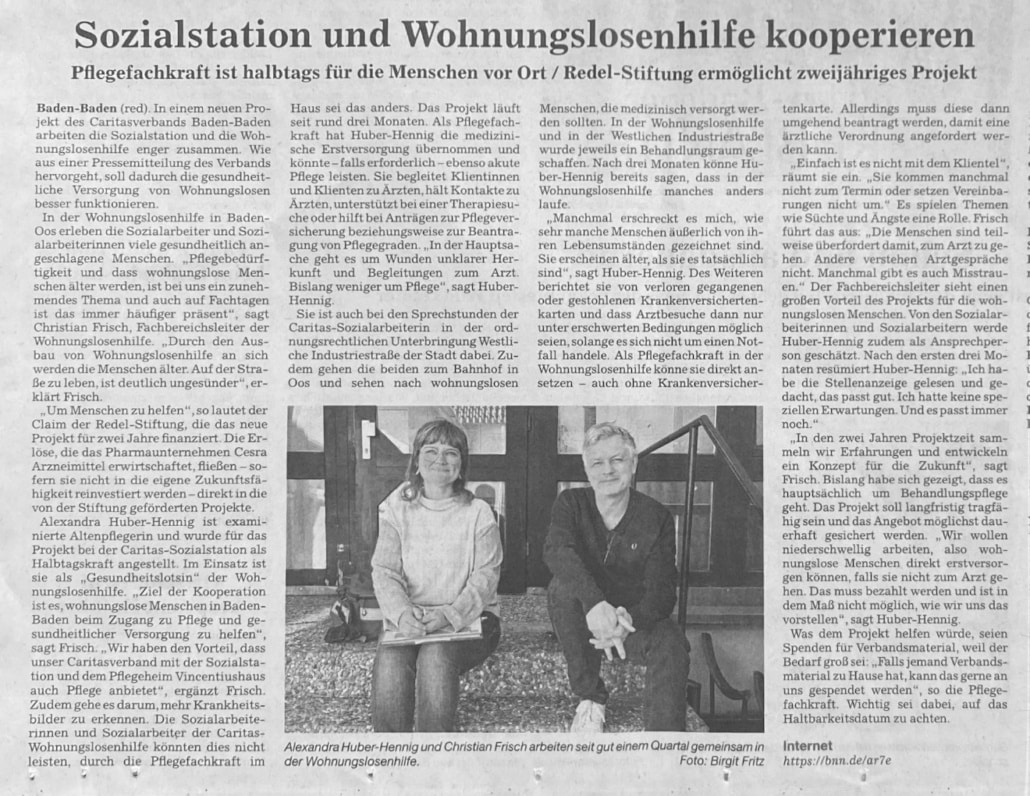
In January, a Healthcare Navigator joined the Caritas Homelessness Support Service in Baden-Oos. She helps people in Baden-Baden experiencing homelessness to access nursing care and medical services. The Redel Foundation is funding the initial start-up of this project for the coming two years. “Together with the Redel Foundation, we are committed to helping all people. We do this worldwide, but are also mindful of the situation of people here in Baden-Baden and recognise the need for the Caritas Association’s Homelessness Support Service,” says Martin Schröder, Chairman of the Redel Foundation.
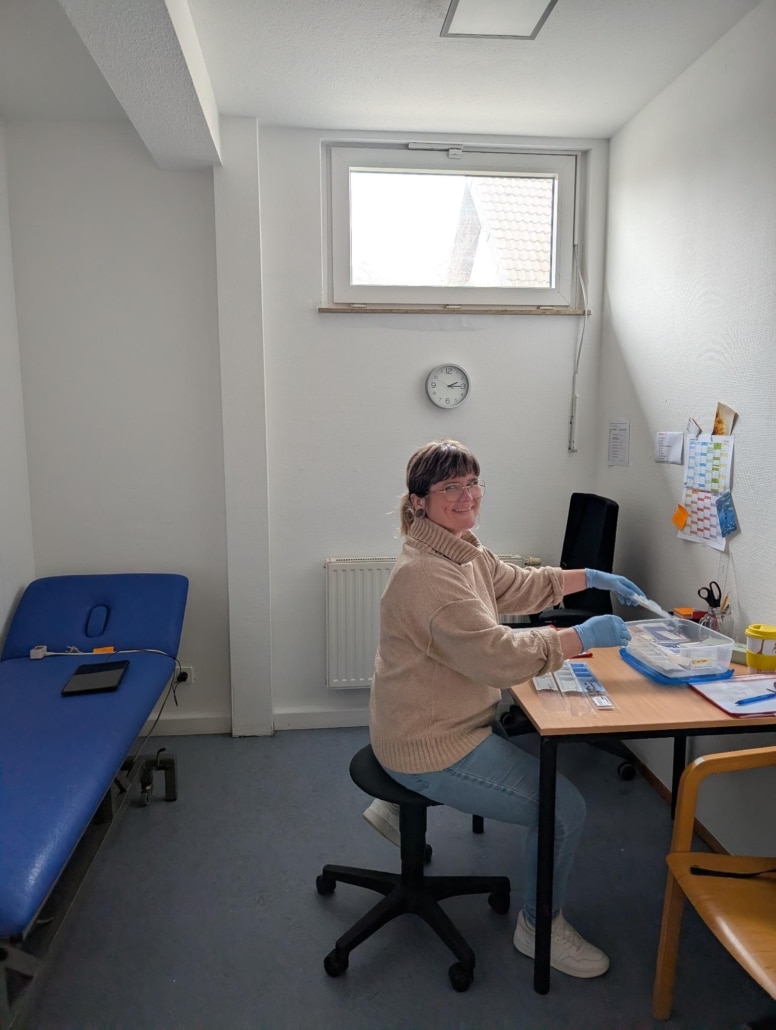
The Caritas Home Care Service has employed Alexandra Huber-Hennig for the project. She is a qualified geriatric nurse, but works for the Homelessness Support Service. She provides preliminary medical care for the Homelessness Support Service and, in acute cases, also emergency care. This specialist support enables the identification of a broader range of medical conditions among people in poor health. The social workers from Caritas Homelessness Support Service are unable to do this. “Having a qualified nurse on site makes all the difference,” says Christian Frisch, which is why the social workers greatly appreciate having her as a contact person.
Emergency assistance and long-term support
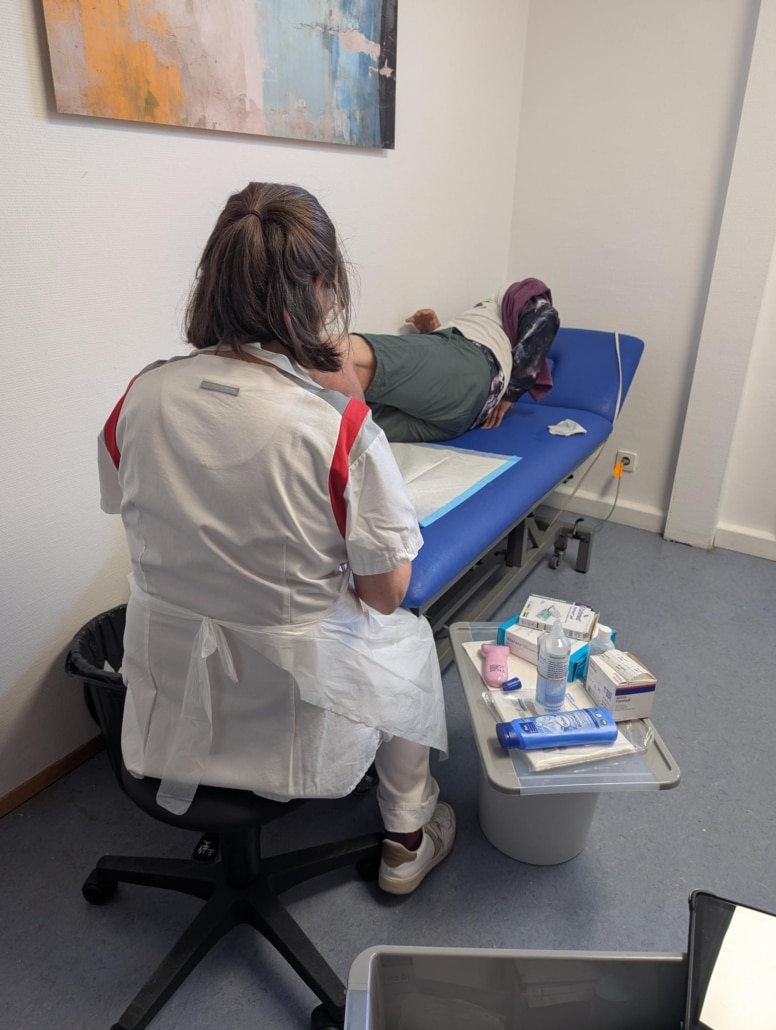
Huber-Hennig can get to work immediately and treat wounds, even if someone’s health insurance card has been lost or stolen. Medical appointments are not normally possible without it, unless the situation is life-threatening. In this case, wounds would only be treated if sepsis (blood poisoning) has developed, for example.
“I do a lot of health-related consultations,” says the 51-year-old. “And I keep doing them because people experiencing homelessness are often unwilling to see a doctor.” A fear or mistrust of doctors plays a role here, as does being overwhelmed. This is why Huber-Hennig also accompanies people to medical appointments, liaises with the doctors, helps people find treatment and assists with applications for nursing care insurance and care level assessments. “I actually always have someone sitting here; they’re usually here about injection abscesses or scratches though and not so much about nursing care,” explains Alexandra Huber-Hennig. “I work closely with the wound care specialist from our Home Care Service, who tells me how I can treat wounds.”
There for all people experiencing homelessness
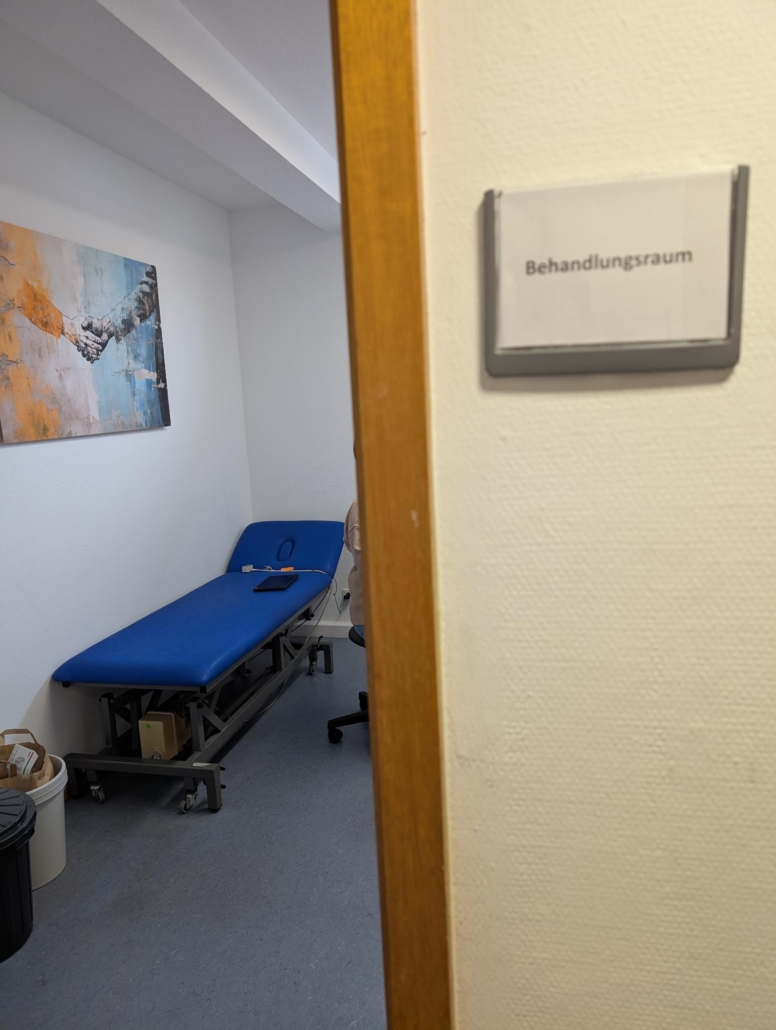
Huber-Hennig also attends the drop-in hours that the Caritas social worker offers at the municipal homeless shelter on Westliche Industriestraße. Together they also check the area around the railway station in Baden-Oos to see if any homeless people need medical attention. A treatment room has been set up at both the Homelessness Support Service and the shelter on Westliche Industriestraße as part of the project.
“Caritas Homelessness Support Service takes good care of the people it assists and this also involves social care work – in other words, caring for their emotional well-being. This makes a big difference. I dress wounds, administer injections and prepare medication, but I also talk to people a lot. Specifically, I discuss their medical history and the subject of addiction.” Christian Frisch adds that these conversations can encourage people to seek treatment or visit an advice centre.
Huber-Hennig sums up the first three months with a smile: “I joined the Homelessness Support Service with a completely open mind. I read the job ad and thought that it sounded like a good fit. I didn’t have any expectations. And it still suits me today.”
Gaining two years of experience
“Over the two-year project period, we’ll gain valuable experience and develop a concept for the future,” says division head Christian Frisch. To date, their work has mainly involved medical care. “I don’t see any extensive nursing care needs at present. But there are a few people whose condition meets care level one or two,” says Huber-Hennig. “Which is why I find the job title of ‘Healthcare Navigator’ very apt.”
“Expansion of our Homelessness Support Service means people are living longer. Living on the streets is considerably unhealthier,” says Christian Frisch. He says of nursing care: “Places in care homes are hard to come by and it is even harder for people experiencing homelessness to access these.” The advantage is that the Caritas Association also offers nursing care through its Home Care Service as well as through the Vincentiushaus residential nursing home.
A long-term approach
The project is intended to be sustainable in the long term and to provide its services for as long as possible. “We need to ensure that we can bill for as many of our services as possible so that we can continue to use the funding from the Redel Foundation beyond the two-year period,” says Christian Frisch. He distinguishes between nursing care and support for people experiencing homelessness here. The Homelessness Support Service provides support without knowing whether they can bill for it. “Anyone can come in to take a shower and stay the night here at the Homelessness Support Service. It can then happen that someone pretends to be homeless when they aren’t and then we end up having to foot the costs.”
Baden-Baden’s Caritas Association already has ideas about how to move forward when the funding from the Redel Foundation ends. “We envisage a partnership with the social services department of the city of Baden-Baden. It also recognises the need for nursing care and medical services for people experiencing homelessness,” says Christian Frisch.
About the Homelessness Support Service
For more information on the Homelessness Support Service that Caritas offers in Baden-Baden, see
https://caritas-baden-baden.de/wohnungslosennotfallhilfe/
Impressions
Support the work of the Redel Foundation and become part of a good cause too – become a benefactor!
